

Let’s be honest, marketing can sometimes sound like another language. You’ve got acronyms flying around, buzzwords that change every year, and phrases that seem to confuse more than they clarify. At Blueprint Brands, we prefer to keep things simple. As we say, less jargon, more listening.
This glossary is for anyone who’s ever nodded along whilst secretly wondered what brand architecture or GEO actually means. It’s a straightforward and clear guide to the most common marketing and branding terms, with practical examples you can relate to.
A
A/B Testing
Trying out two different versions of something such as an email subject line or a landing page to see which performs better.
Example: You send half your audience an email titled “Get your free guide” and the other half “Your 5-step marketing plan“. The one that more people open, wins.
Above the Line (ATL)
Traditional advertising like TV, radio, print, or billboards, which is designed to reach large audiences rather than target specific customers.
Example: Coca-Cola’s iconic Christmas TV advert
Audience Persona (sometimes called Buyer Persona)
A semi-fictional sketch of your ideal customer. Done well, it helps you create messages that actually land.
Example: Sarah, 38, Head of Operations in a fast-growing tech firm, wants clear marketing that helps her scale without the fluff.
B
Brand Architecture
The hierarchy of brands within a single organisation. Think of it as a family tree for your business. They can be categorised into Monolithic, Endorsed, and Pluralistic brands. Monolithic is characterised by a strong, master brand. Endorsed is characterised by the product or division having its own market presence which benefits from association or endorsement from the parent. Pluralistic is characterised by a parent company managing a series of distinct and independent brands, where the name of the parent is either invisible or inconsequential.
Example:
Monolithic – Google Maps, Google Docs, Google Earth, Gmail
Endorsed – iPhone, iPad, MacBook, iCloud
Pluralistic – Unilver is the parent company which manages a series of distinct, unrelated brands such as Knorr, Colman’s Mustard, Dove, Persil, Vaseline
Brand Equity
The intangible value and importance of a brand to a customer. It is the extra value your brand name adds beyond the product or service itself.
Example: People pay more for an Apple laptop than a similar spec from another brand because of the perception, experience and feelings Apple represents.
Brand Value
The financial worth of a brand to management and shareholders. It is calculated using a variety of financial methods as well as analysing market performance.
Example: Shell is the UK’s most valuable brand at £33.9bn according to Brand Finance
Brand Promise
The commitment you make to your customers about what they can expect from you and why you’re different.
Example: At Blueprint Brands our promise is clear; less jargon, more listening.
Bottom of the Funnel (BOFU)
The final stage in the marketing journey, when your customer is ready to buy.
Example: When someone clicks “Book a call” after navigating through your website.
C
Call to Action (CTA)
The thing that tells people what to do next.
Example: A button on a website that says, “Buy Now”.
Content Marketing
Creating useful or interesting content such as articles, video’s, or guides that helps people and builds trust in your brand.
Example: This glossary is content marketing. You’re reading something that is helpful and showcases our expertise.
Customer Journey
The steps someone takes from first hearing about you to becoming a loyal customer. The steps are awareness, consideration, purchase, retention and loyalty.
Example: A person decides they want to get in shape. They search video’s on YouTube for easy exercises at home. They view your 15-min home workout video. They visit your website for more hints and tips. They browse your online coaching plans and purchase a 2-week trial. They sign up after the trial for a year. They refer their friend and receive a month’s subscription for free.
D
Demand Generation (Demand Gen)
Marketing activities that create awareness and interest in your product or service before people are ready to buy.
Example: Hosting a webinar that positions your brand as experts and gets people thinking, “I might need that”.
Differentiation
What makes you stand out, how you demonstrate that, and how you make it easy for consumers to understand the difference.
Example: The algorithm used for TikTok ‘s “For You” page is based on user interest and behaviour so that it delivers a highly personalised and dynamic feed. This helps it differentiate from other social networks which primarily rely on the users existing follower count and social connections.
E
Engagement Rate
How much people interact with your content such as likes, comments, and shares. It is a measure of connection and not just visibility.
Example: A LinkedIn post with 10 thoughtful comments from your target audience can be more valuable than one with 1,000 impressions.
Evergreen Content
Content that stays relevant over time (like this glossary!)
Example: A post on “Ten ways to build trust with your audience” will still make sense next year as you update it. A post on “2024 marketing trends”, won’t.
F
Funnel
A way of describing the stages people go through before buying. It starts wide with lots of interest and narrows down to actual customers (see Bottom of the Funnel).
Example: People read your blog, then they download your resource, then book a meeting. Each step is narrowing the funnel.
Fractional CMO (Chief Marketing Officer)
A part-time or contract marketing leader who provides senior-level strategy without the full-time cost. Can also be referred to as Interim.
Example: You bring in a fractional CMO for two days a week to set direction and lead your team.
G
Generative Engine Optimisation (GEO)
A new approach to being visible online. It involves optimising your content so it appear in AI-driven search results and chatbots like ChatGPT or Google’s AI overview.
Example: Instead of writing to rank high in traditional search results, GEO means structuring your content so AI assistants recognise and cite your brand when users ask questions. (Yes, even this glossary will need to evolve!)
M
Messaging
The words, tone, and ideas that communicate your brand to the world.
Example: Nike is renowned for its positive messaging. Empowering people to feel good about themselves and to exercise whatever their background or circumstances. It is summed up in the strapline, “Just Do It”.
Metrics
Numbers that measure performance and effectiveness. Just remember though, not all that can be measured necessarily matters.
Example: 1000 people read your email and 100 click through to your website from it. You use click-through rate (CTR) as a metric to measure your performance. In this case your CTR is 10%.
O
Out-of-Home advertising (OOH)
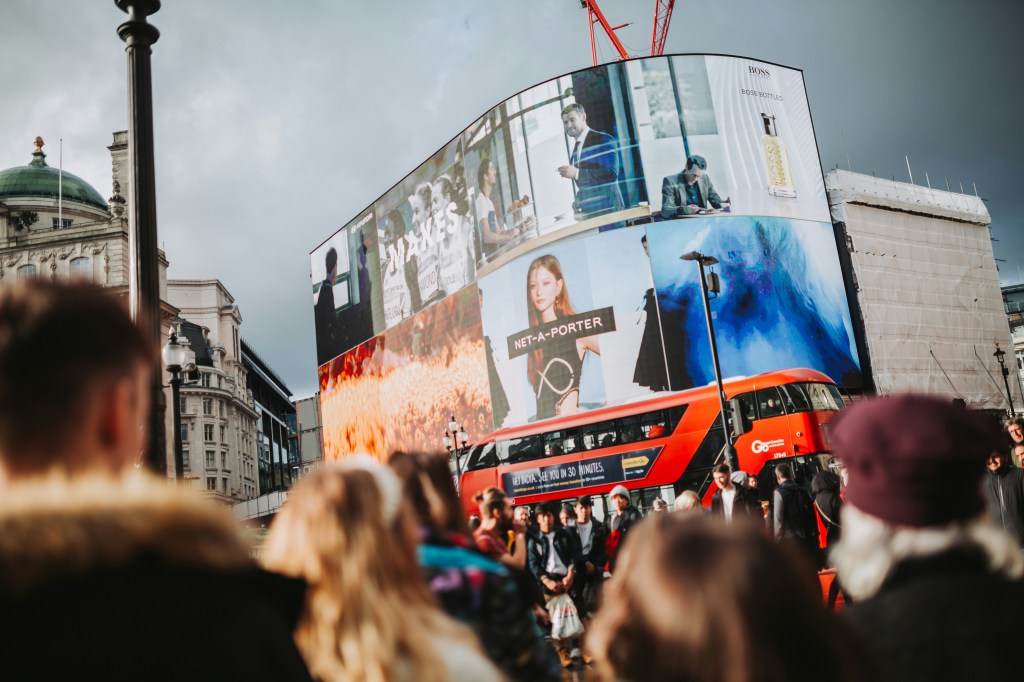
Any form of advertising that you see outside of your home such as billboards, digital screens and posters.
Example: Piccadilly Circus in London has a bank of digital walls advertising various products.
P
Paid Media
Anything you pay for, such as adverts, sponsorships, or promoted posts.
Example: A sponsored LinkedIn post to promote your latest report.
Positioning
How you want to be seen compared to competitors. It’s the story you tell and the space you own in people’s minds.
Example: Vinted is seen as the go-to marketplace to buy and sell unwanted clothing, sustainably. Whilst eBay and Facebook Marketplace may dominate the online marketplace, Vinted has carved out a niche for unwanted clothing in Europe.
Purpose
The reason your brand exists beyond simply making money. When it’s real, it can be incredibly powerful and drive everything in your business.
Example: The BBC is driven by its Reithian purpose to Inform, Educate, and Entertain.
R
ROI (Return on Investment)
What you get back from what you spend, such as sales, leads or brand awareness. It can be difficult to calculate accurately because of different variables such as attribution, time series and other non-financial elements. However, the most basic calculation is (Revenue – Marketing Cost) / Marketing Cost X 100 = %
Example: If you spend £5,000 on adverts and generate £15,000 in sales, that’s a 200% ROI.
Rebrand
A refresh or rethink of your visual identity, messaging or positioning. Done well, it’s an evolution. Done badly, it can be fatal.
Example: Xero rebranded to emphasise their commitment to supporting their customers, utilising a new tagline “Your business supercharged”.
S
Search Engine Optimisation (SEO)
Increasing the visibility of your website and its content on search engine results by optimising content, structure and technical elements. Think clarity, not trickery.
Example: Using clear headings and keywords users will search for in order to rank higher.
Strategy
A plan for achieving long-term goals. It is the thinking before the doing.
Example: Deciding why you’re launching a campaign before worrying about what to put in it.
T
Tone of Voice
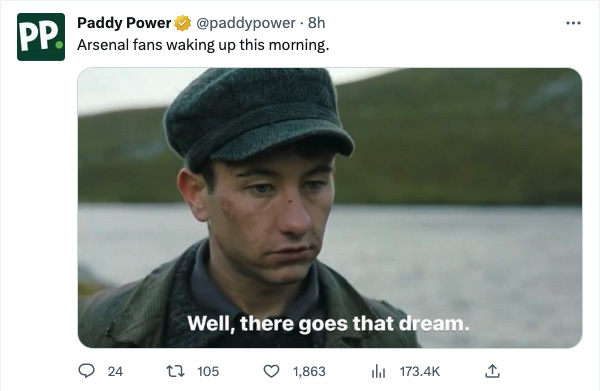
How your brand sounds. What personality does it convey; funny, authoritative, playful, technical? It’s what makes you sound human.
Example: Paddy Power uses a cheeky and witty tone of voice. It is trying to replicate “pub banter” as a way of creating entertainment.
Top of the Funnel
The early stage of marketing when you’re trying to build awareness and spark interest.
Example: A social media post that introduces your brand without asking for anything in return from the user.
Why does this matter?
Marketing doesn’t need to sound complicated to be effective. The clearer we are, the better we connect and the better the results.
So, if you ever feel lost in an avalanche of acronyms or a blizzard of buzzwords, hopefully this glossary will provide some simplicity for you.
 Blueprint Brands
Leave a comment